Inject Personality into Your Pantry with These Labels
If you’ve ever stared at a row of identical, blank glass jars and felt a distinct lack of joy, you aren’t alone. The kitchen is the heart of the home, but often, our storage solutions are purely utilitarian. We buy generic chalkboard stickers or, worse, leave the spices in their flimsy store-bought packets. It’s time to change that. Enter the Funny Animal Kitchen Spice Jar Labels—a set of design assets that do more than just organize your cumin and paprika. They bring a distinct, vintage-inspired personality to your cooking space that is impossible to ignore.
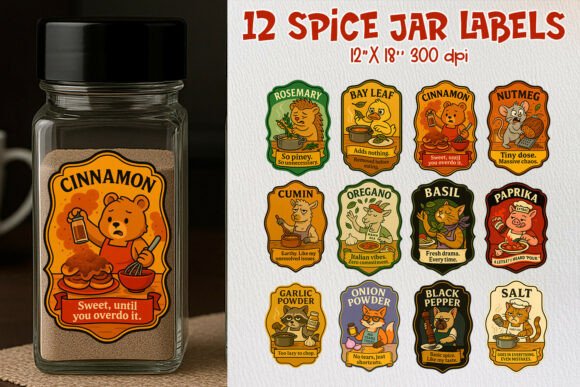
As a creative professional, I view these labels not just as stickers, but as a cohesive brand identity for your pantry. The set includes 12 high-resolution PNG files, each designed at 300 DPI. This is crucial for packaging design and print design because it ensures the text and illustrations remain crisp and legible, even when scaled up to larger canisters. The visual style leans heavily into a warm, retro aesthetic. We aren't talking about sterile, modern vector art here. These labels have texture, depth, and a sense of history. The typography is bold and expressive, acting as a display font that commands attention. It captures the essence of vintage typography while remaining clean enough for easy reading from across the kitchen counter.
The Visual Language: More Than Just Clipart
What makes the Funny Animal Kitchen Spice Jar Labels work so well from a design perspective is the interplay between the illustration and the type. Each label features a different animal character—think sassy foxes or judgmental cats—paired with a pun or a funny twist on the spice name. This approach to illustrative typography creates an immediate emotional connection. In the world of brand strategy, we call this "humanizing the product." By giving your oregano a face and a smirk, you transform a mundane ingredient into a conversation starter.
The color palette is worth noting for anyone interested in graphic design. The warm tones—burnt oranges, deep creams, and soft browns—ensure that the labels don't clash with the natural colors of the spices or the wood tones common in kitchen cabinetry. This is a masterclass in color theory application; the palette feels appetizing and comforting. Whether you are a hobbyist looking to spruce up your space or a small business owner looking for inspiration on product packaging, this set demonstrates how a limited color range can create a unified, professional look.
Practical Applications for Designers and Crafters
While the primary use case is obviously kitchen organization, the versatility of these design assets extends far beyond the spice rack. For content creators and social media managers, these high-res PNGs are gold. You can easily overlay them onto photos for Instagram posts or use them as props in flat-lay photography to add a touch of whimsy to your feed. The vintage style aligns perfectly with current trends in "cottagecore" or "grandmillennial" aesthetics that dominate platforms like Pinterest.
For the entrepreneurs and small business owners in the room, consider the application in marketing materials. If you run a bakery, a cooking class, or a food blog, incorporating this specific style of creative typography into your flyers or menus can set a playful, approachable tone. It signals to your audience that you don’t take yourself too seriously and that you value charm. Furthermore, for crafters, these labels are perfect for DIY projects. Think custom tea towels, coasters, or even greeting cards. The PNG format allows for easy manipulation in software like Canva, Procreate, or Adobe Photoshop, making them accessible even if you aren't a vector wizard.
Typography, Readability, and The "Voice" of Your Kitchen
Let's talk about the mechanics of the design. The text on these labels utilizes a style that mimics handwritten fonts or bold sans-serif fonts, depending on the specific spice. This variation is intentional. It creates a visual hierarchy that guides the eye. The name of the spice is legible at a glance—a critical requirement for any packaging design—while the humorous subtext invites a closer look. This balance between readability and personality is something many premium fonts strive for, and these labels nail it.
When applying these to your jars, consider the container material. Glass provides a clean, modern backdrop that lets the warm tones of the label pop. However, they also look stunning on matte ceramic canisters, which complements the vintage texture of the artwork. If you are using these for a client project or a commercial product mockup, pay attention to the lighting. The 3D shadow effects built into the PNGs help the labels look "lived-in" and real, which is a massive advantage for mockup design.
Why It Works for the Modern Creator
We live in an era of modern typography where minimalism often reigns supreme. However, there is a growing counter-movement that favors maximalism, personality, and nostalgia. The Funny Animal Kitchen Spice Jar Labels sit squarely in this latter camp. They are an antidote to the sterile, sans-serif sameness of corporate design. For designers, they serve as a reminder that typography doesn't always have to be serious to be effective. Sometimes, the best brand identity is one that makes people smile.
If you are evaluating whether this style fits your project, ask yourself: Does my brand voice lean toward the witty and warm? If the answer is yes, these assets are a shortcut to achieving that look without hours of illustration work. They are ready-to-use commercial design assets that solve a specific problem: how to add character to functional spaces.
Final Thoughts on Seasoning Your Space
Ultimately, the goal of good design—whether it's a website, a logo, or a spice jar—is to evoke an emotion. The Funny Animal Kitchen Spice Jar Labels evoke joy, humor, and warmth. They remind us that even the most mundane parts of our day, like grabbing the salt, can be an opportunity for a smile. For marketers, bloggers, and home cooks alike, this set is a practical, high-quality solution to the boring pantry problem. It’s not just about labeling your spices; it’s about curating an environment that reflects your unique sense of humor and style.